Battery Recycling

Recycle your Lithium-Ion batteries and devices
@ Moontunes ~~
Rotary Interact Popcorn Tent
Local Action. Global impact.
Lithium-Ion Battery Recycling Project
The Rotary Club of La Crosse - Downtown will be collecting and recycling lithium-ion batteries and rechargeable devices that you’ve been holding onto in your junk drawers! Join us at Thursday Moon Tunes at Riverside Park 5:30-8pm and bring your lithium-ion batteries and rechargeable devices including smartphones, tablets, electric toothbrushes, laptops, power tool batteries, rechargeable vacuum batteries, wireless headphones, and any other lithium-ion battery and help close the loop.
Climate change is creating a global imperative to electrify everything from our vehicles to our grids. Lithium-ion batteries are at the heart of powering all these solutions and are made up of the same metals like cobalt, copper, nickel and lithium.
At the end of a product’s life, every rechargeable lithium-ion battery is a source for making new batteries and sustainable energy products in the US. By responsibly recycling our products and batteries, we keep them out of landfills, reduce the need to mine critical minerals, and help increase the security of our domestic supply chains.
Note: We can only accept undamaged lithium batteries.
Come recycle with us!
Battery Collection Frequently Asked Questions…
1. What is a lithium-ion battery?
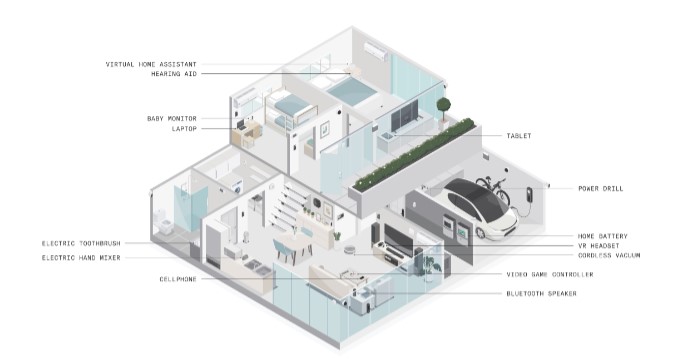
Most Lithium-ion batteries are rechargeable, unlike single-use alkaline batteries. Lithium-ion is the most common type of rechargeable battery for portable electronics, with one of the best energy-to-weight ratios, high open circuit voltage, low self-discharge rate, no memory effect, and a slow loss of charge when not in use. They are used in products such as electric vehicles, laptops, smartphones, electric toothbrushes, electric shavers, handheld vacuums, and power tools (see graphic below).
2. Why is recycling batteries and devices important?
Keeps end-of-life lithium-ion batteries out of landfills, where they are prohibited because they are toxic and flammable. A lithium-ion battery thrown in the trash can explode in our local Xcel Energy incinerator. Helps increase the security of U.S. supply chains for raw battery materials. Supports domestic remanufacturing of lithium-ion batteries. Reduces the need to mine from the earth.
3. What is accepted at a collection event?
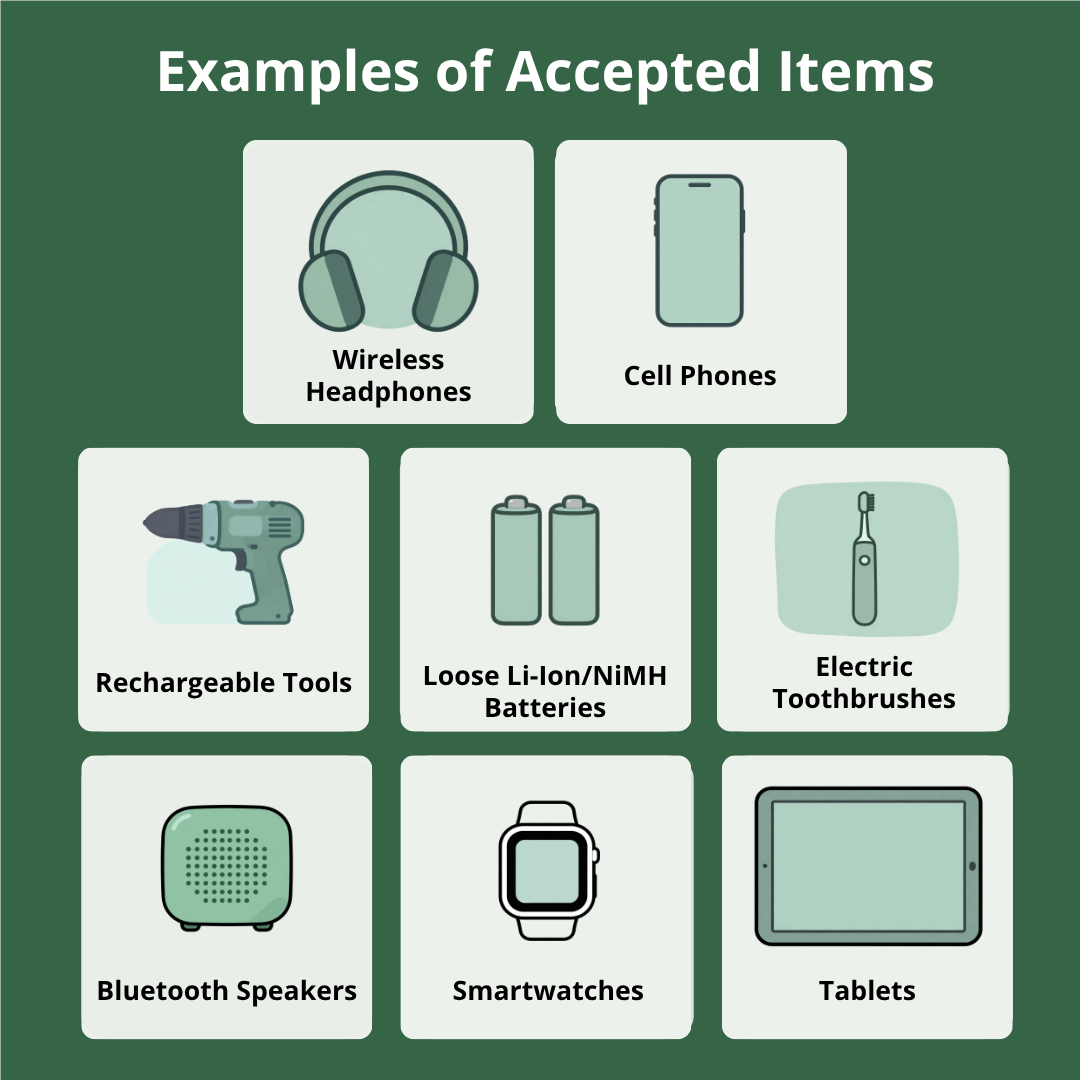
As part of this recycling program, we will be collecting all household items that contain a rechargeable lithium-ion battery. This includes:
- old mobile phone
- electric toothbrushes
- hair clippers
- electric shavers
- laptops
- power tool batteries
- Bluetooth speakers
- cordless vacuum batteries
- e-bike batteries
- wireless headphones
4. What is not accepted at a collection event?
We do not accept damaged batteries.
We only accept rechargeable products that contain lithium-ion batteries.
The maximum battery size accepted is 300Wh or 11 lbs.
If it requires a plugged-in cord to operate, we cannot accept it. We are only accepting wireless products with rechargeable batteries.
5. Do I need to bring the charger and other accessories for the device I’m recycling?
No, you don’t need to bring the charger or any other accessories to recycle your device.
6. Is my data safe?
Before dropping off a personal device, you should always sign out of all your accounts, remove the SIM card and perform a factory reset to remove all personal data. Individuals recycling devices are responsible for wiping any personal data from devices prior to dropping them off at the collection event.
Factory reset instructions:
Apple device
Google device
7. Do I need to remove the battery from the device before dropping it into the battery collection bin?
No, you should drop the entire device into the bin.
8. How many batteries and devices can I drop in the bin?
You may drop in as many devices or batteries as you like.
(adapted from Redwood Materials, Resources for Rotary Clubs)