This Week: Brian Udermann; Is Laughter Really the Best Medicine?
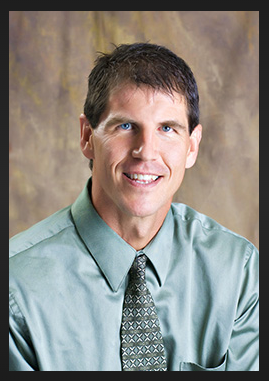
Brian Udermann is a health and motivational humorist, and the author of “TV Rots Your Brain … Or Does It?” and “25 Ways To Cure The Hiccups.”
Brian has been a professional speaker for over 20 years and his interactive and energetic style is entertaining and appeals to a wide variety of groups and organizations.
Brian speaks to school districts, colleges and universities, government agencies, small and large businesses, hospitals, non–profit organizations, and national and international associations.
Brian's passion is encouraging people to laugh a bit more, stress a bit less and regain the healthy balance most people desire.
Lat Week: Pat Stephens, Rotary Lights
AND The Hatchery
Pat Stephens present checks to a number of the Rotary Lights volunteer organizations that helped with the 2023 event. Pat attended all the area Rotary club meetings to distribute checks to different organizations this month.
We also had Marty and Tiff share their story about purchasing The Hatchery and plans for the future. (see link below)
Guests are ALWAYS welcome! RSVP in advance to Niki Pohnl if know you are bringing guests but last minute invites are also welcome!
Raffle Basket Items Needed by April 11
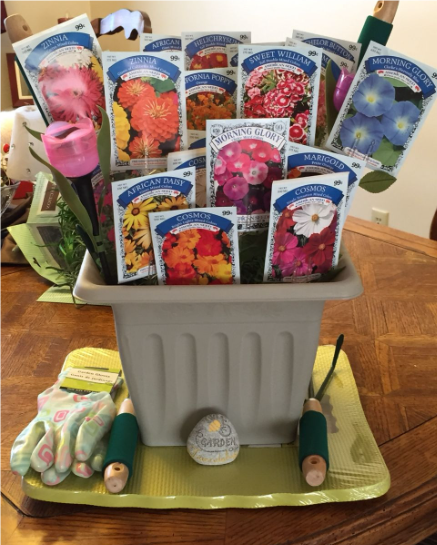
As a Polio fundraiser, each club is assigned to bring a raffle basket to TriCon. Our theme this year is:
POLLINATION ATTRACTION
We are looking for things like flower seeds packets, gardening tools/gloves, knee pad, bird house, humming bird feeder, yard decor, potting soil, pots, etc.
Bring your donated items to a club meeting by April 11th or drop off at the Rotary office at 432 Cass St.
Also accepting cash or Venmo donations to purchase items.
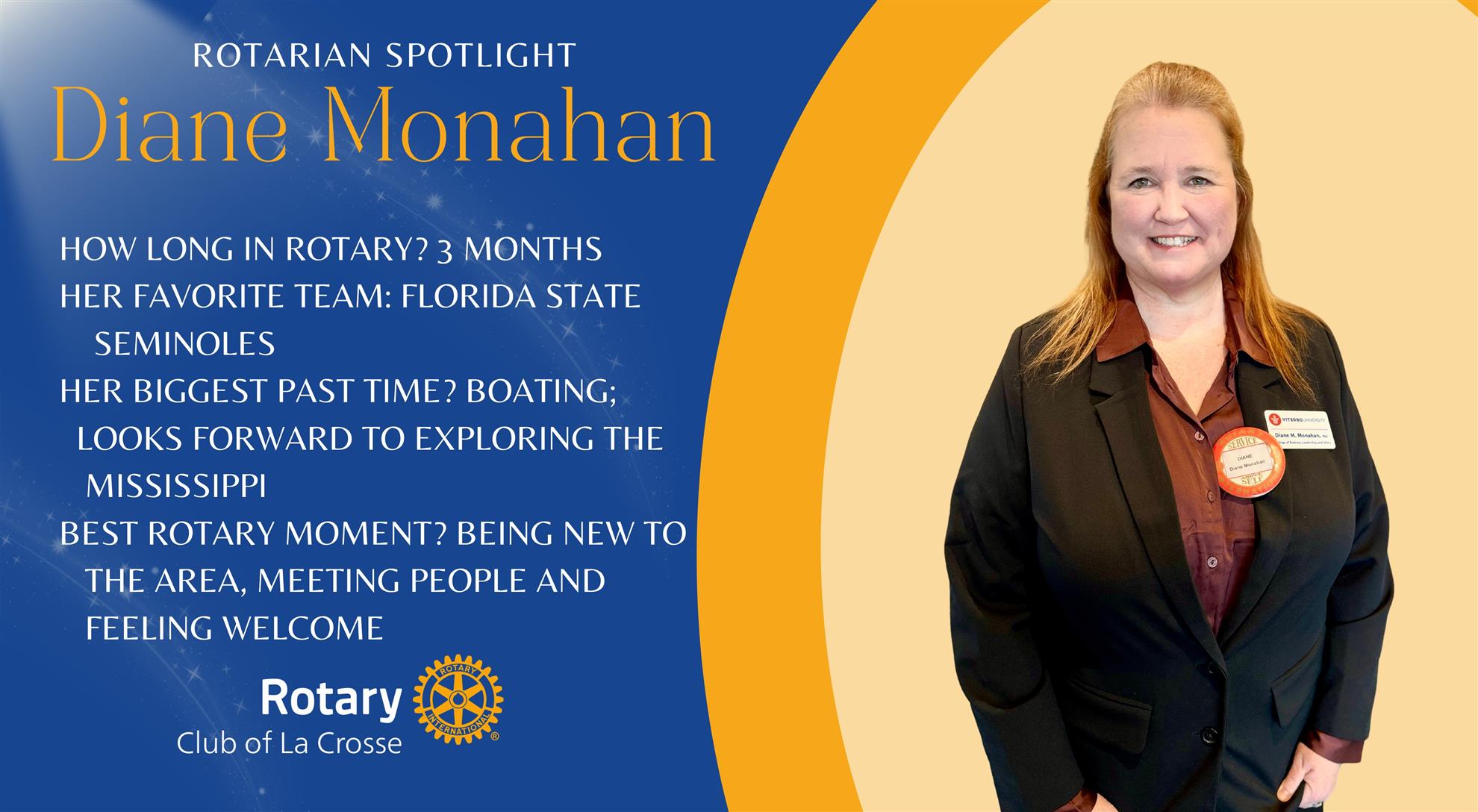
We welcome Lisa Archer to our club! Lisa is the Chief Nursing Officer at Mayo Clinic Health System. She grew up in Minnesota and has lived in the La Crosse area for about two years. She is in a leadership position at Mayo Clinic, working to bring a large group of people to work towards the best possible healing conditions, not unlike our group of Rotarians working together towards a better world for all. Lisa is sponsored by Eva Marie Restel.
Rotary Weekly Program Leads
Richard Strauss is looking for 2024-2025 weekly program leads. If you have heard a presentation you think would be interesting to our club, if you have something you would like to learn more about, or even if you just have a program idea...please reach out to Richard Strauss as he begins to fill in our programs calendar for the next Rotary year.
TriCon - April 18-20, 2024
As a member of the three represented districts (6220, 6250, 6270), we invite you to come together for a weekend of lively discussion, educational sessions, and tons of fund and networking. Come and be inspired by the plenary speakers and be exposed to the true breadth and depth of Rotary International through the many breakout sessions.
This is an ongoing club fundraiser and cards are available at every meeting. Our club receives a percentage of the each AND YOU receive the full value of the card your purchase.
We have cards for $10, $20, $25, $50, and $100 available for gas and/or groceries. We accept cash, check, Venmo, or billing on your next quarterly invoice.
Thank you for considering!
New Member Proposals
The following community members have been proposed to become members of our club:
Peter Dietzel, Retired Real Estate Broker, proposed by Niki Pohnl
Justin Riggert, Principal Engineer at Comcast, proposed by Mark Jolivette.
Amanda Holmgaard, Good Fight Club, proposed by Katie Berkedahl
Eugene Shields, Good Fight Club, proposed by Katie Berkedahl
According to club procedure, applicant names are to be published in our weekly email bulletin for two weeks. If there are no objections from the current membership, these applications will be approved. Please contact the Club Administrator if you object to these applications by March 26, 2024.
Click the link below if you have a new member to propose!
Week FOUR of RI’s Month of Water, Sanitation & Hygiene (WASH).
Nobody takes water for granted in Zimbabwe, least of all the residents of Musekiwa and Mushaki. Located about 160 kilometers (99 miles) from the capital of Harare, the two villages have been drastically affected by the country’s water shortage. Until recently, many residents walked five kilometers (three miles) or more to find water every day. “They were getting some water from open wells, some from rivers,” says Trymore Tafadzwa Kabanda, a counselor for Mushaki. That changed when two Rotary clubs thousands of miles apart decided to collaborate on a grant-funded project. Members of the Rotary Club of Saint Helena, California, USA, learned about the villages’ situation in 2020 from a guest speaker whose wife had grown up in the area. They found out about the devastating effects climate change has
had on rainfall in rural Zimbabwe, where more than 90% of households depend on agriculture for their main livelihood. “They had a horrendous water problem,” says John Muhlner, a past president of the Saint Helena club. “Women, for the most part, were walking miles every day to bring water back to their homes. Often, they would go and wouldn’t find water, or maybe the water they found would be contaminated.”
The Saint Helena Rotarians contacted the Rotary Club of Harare CBD, Harare, Zimbabwe, which conducted a community assessment. After that, the clubs raised funds and applied for a Rotary Foundation Global Grant. The US$82,000 project plan was to dig two wells, install solar-powered pumps and a water piping system, train residents to maintain the equipment, and conduct an educational campaign about the importance of hygiene….“Water touches on all of Rotary’s areas of focus,” says Mary Beth Growney Selene, chair of the Water, Sanitation, and Hygiene Rotary Action Group. “Children are not being pulled away from school to go fetch water in a local river. Parents don’t have to spend time fetching water, so they can be more productive economically. People aren’t as susceptible to waterborne diseases. ‘It all starts with water,’ is what we say.” That was certainly the case in Mushaki and Musekiwa. “Now, most of the villagers don’t have to go more than a few meters to fetch water,” Kabanda says. “Also, diseases like cholera are prevented.














.png)